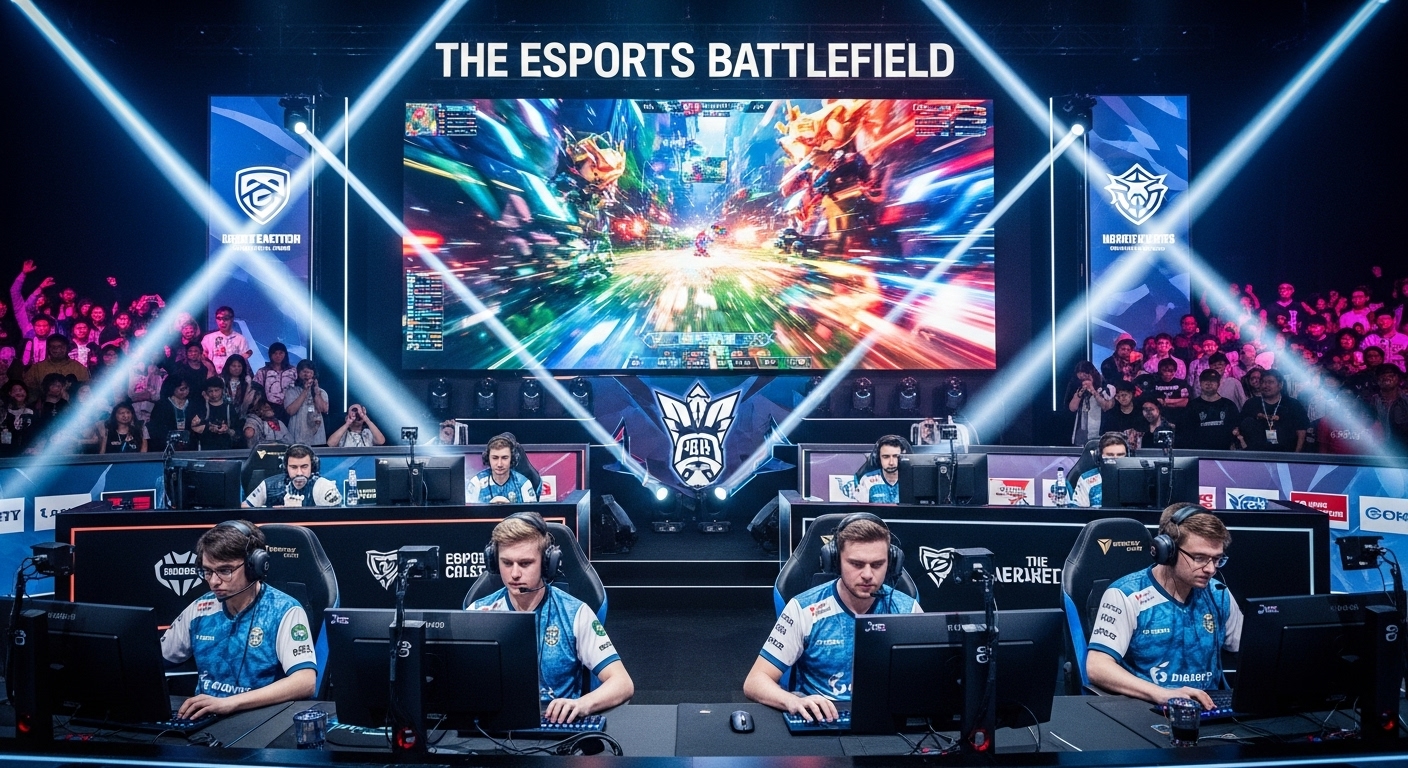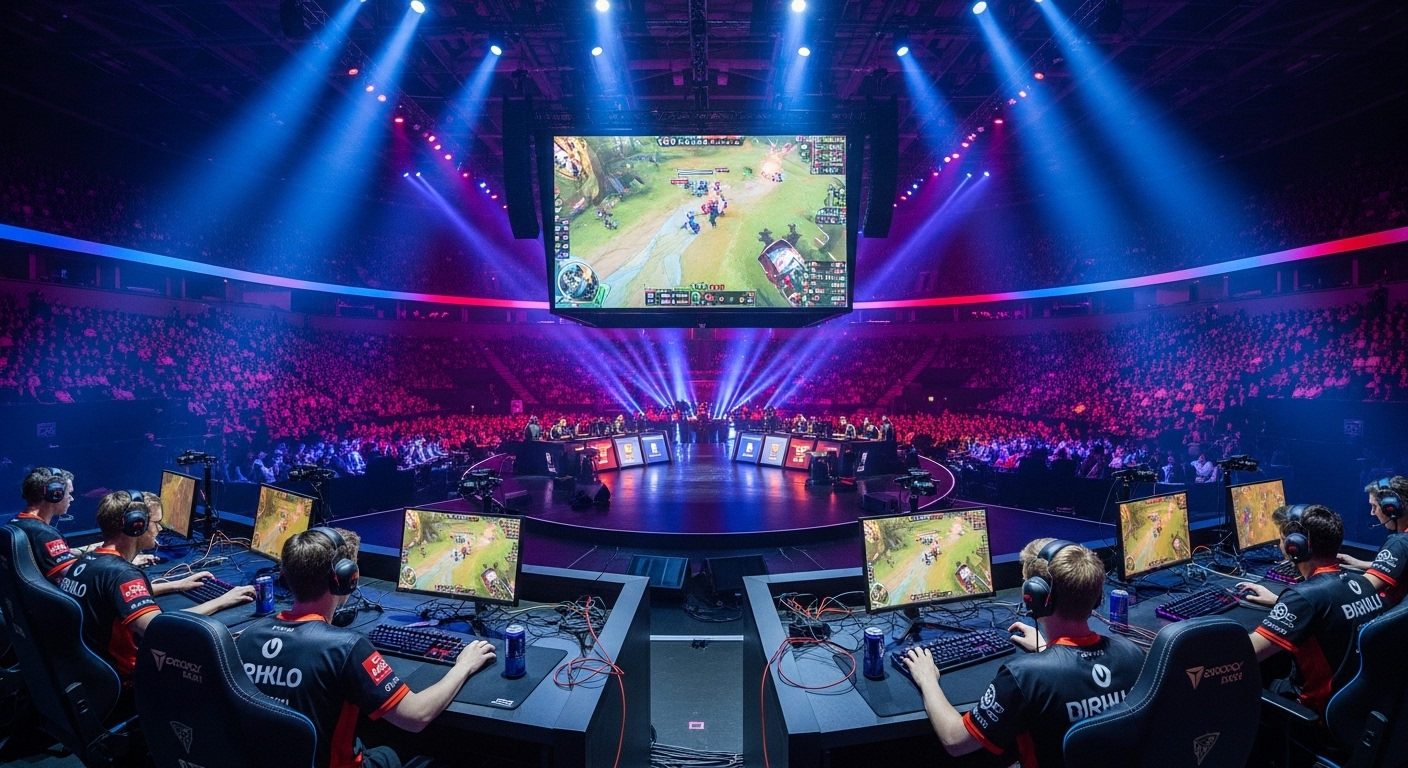
Esports, once a niche activity for gamers, has rapidly grown into a global phenomenon. The rise of competitive video gaming has reshaped not only how people play games but also how they view entertainment and competition. Today, esports has its own ecosystem, with professional players, huge audiences, lucrative sponsorships, and international tournaments that draw millions of fans worldwide. This blog post takes a deep dive into the history of esports, its structure, its massive economic impact, and what the future holds for this exciting and fast-growing industry.
What is Esports?
Esports, short for electronic sports, refers to organized, multiplayer video game competitions, particularly between professional players, individually or as teams. These competitions can range from amateur events with small prize pools to high-stakes tournaments that offer millions of dollars in rewards. Esports spans various genres of games, including first-person shooters (FPS), multiplayer online battle arenas (MOBA), real-time strategy games (RTS), and battle royale games.
Games like League of Legends, Dota 2, Fortnite, Counter-Strike: Global Offensive, and Overwatch are some of the most prominent titles in the esports world. These games have not only gained massive followings among players but have also become central to the esports ecosystem, with professional leagues and tournaments built around them. What sets esports apart from casual gaming is the competitive nature of these events, the level of skill required to succeed, and the thriving fanbase that surrounds these tournaments.
The Origins of Esports: How It All Began
The origins of esports date back to the early days of video gaming in the 1970s and 1980s. In those years, video games were mainly played in arcades, and high-score competitions were one of the first forms of competitive gaming. However, it wasn’t until the 1990s, with the advent of networked multiplayer games, that esports began to take shape as we know it today.
Games like Quake, StarCraft, and Warcraft played a major role in the development of competitive gaming. In 1997, the first large-scale esports tournament, the Red Annihilation tournament for Quake, took place. It attracted hundreds of players from around the world and set the stage for future esports events. The early success of these tournaments, especially in South Korea, helped to popularize esports internationally.
The year 2000 marked another milestone in esports history with the launch of the World Cyber Games (WCG), which was the first global esports tournament. It featured players from across the world competing in various games and served as a precursor to today’s international competitions. As esports began to gain traction, streaming platforms like Twitch—which launched in 2011—further accelerated its growth. Players and fans could now watch games live, interact with one another, and contribute to the growing esports culture.
Esports Tournaments and Leagues: The Structure of Competitive Gaming
Esports is structured much like traditional sports, with leagues, tournaments, and professional players. The most popular esports titles have professional leagues where top teams compete in a series of regular matches, eventually earning the chance to participate in global tournaments.
For example, League of Legends, one of the most successful esports titles, operates through regional leagues like the LCS (North America) and LEC (Europe). These leagues host seasonal competitions where teams play against one another for championship spots. At the end of each season, the best teams qualify for the League of Legends World Championship, which is one of the most-watched esports events globally. Similarly, Overwatch League and Dota 2’s The International follow similar structures, where the most skilled teams battle it out for fame and a share of multi-million dollar prize pools.
These tournaments and leagues are broadcasted across various platforms, attracting millions of viewers who watch the competitions live on platforms like Twitch, YouTube Gaming, and other streaming services. The prize pools for these tournaments can be substantial, with some events offering millions of dollars in prizes. For instance, the prize pool for The International (a Dota 2 tournament) has reached over $40 million in some years, making it one of the most lucrative tournaments in the world.
The Economic Impact of Esports: A Billion-Dollar Industry
The economic impact of esports has been nothing short of revolutionary. What was once a small-scale activity has now turned into a multi-billion-dollar industry with a global footprint. Esports revenue is generated from several key areas, including sponsorships, media rights, ticket sales, merchandise, and advertising.
One of the biggest sources of revenue for esports comes from sponsorships. Major brands from across various industries, including technology, energy drinks, apparel, and automobiles, have started sponsoring esports teams, events, and tournaments. These sponsorships are lucrative and essential to the survival of esports organizations, which often rely on them to fund operations and pay players. Big names like Intel, Coca-Cola, Nike, and Mercedes-Benz are all heavily invested in esports sponsorships.
In addition to sponsorships, media rights have also become a significant revenue driver for the esports industry. Platforms like Twitch and YouTube are the primary channels for streaming esports events, but traditional TV broadcasters are also beginning to enter the scene. Companies are paying to air esports content on mainstream channels, further legitimizing esports as a major form of entertainment. These media rights agreements have allowed esports to reach an even wider audience, increasing its visibility and revenue potential.
Merchandise and ticket sales are other significant revenue streams. Esports fans regularly purchase team jerseys, hats, and other branded merchandise to show their support for their favorite players and teams. The sale of tickets to live esports events, which often sell out arenas, adds another dimension to the industry’s financial success.
The Global Appeal of Esports: A Cross-Cultural Movement
One of the key factors driving the success of esports is its ability to transcend geographical boundaries. Unlike traditional sports, which are often limited by regional popularity, esports can be enjoyed anywhere there is internet access. This global appeal has led to the rise of esports communities all over the world, from North America and Europe to South Korea, China, and Brazil.
South Korea, in particular, has been a hotspot for esports for decades. The country boasts one of the most vibrant and competitive esports scenes, particularly for games like StarCraft and League of Legends. South Korea has even gone so far as to establish dedicated esports stadiums and broadcasting channels, where games are televised for a wide audience. Other countries, such as China and the United States, have also invested heavily in esports, creating new leagues, facilities, and opportunities for players.
Esports has also become a social experience. Fans engage with one another on social media platforms, streaming sites, and in live chat during broadcasts. Major tournaments are often accompanied by fan meetups, viewing parties, and online events, where fans can connect with others who share their passion for gaming. This sense of community has become a central part of esports, and it’s one of the reasons why it continues to grow in popularity year after year.
The Role of Streaming: Changing the Way We Consume Entertainment
Streaming has played a pivotal role in the growth of esports, revolutionizing the way fans engage with competitive gaming. Platforms like Twitch, YouTube Gaming, and Facebook Gaming allow players to stream their gameplay live, while also interacting with their audience in real time. This has allowed esports to become not just a spectator sport, but an interactive experience where viewers can contribute to the conversation and even influence the outcome of events through live interactions.
The rise of streaming has also created new careers for gamers. Many top-tier professional gamers and streamers are able to earn substantial incomes from their live broadcasts, sponsorships, and merchandise sales. Some have even become celebrities in their own right, with millions of followers across social media platforms. In this way, streaming has helped elevate the status of esports players, who are now considered as much entertainers as athletes.
Challenges Faced by Esports
Despite its rapid growth and global appeal, esports still faces several challenges. One of the biggest concerns is player burnout. Professional esports players are often required to train for hours every day, leading to mental and physical exhaustion. The intense pressure to perform at the highest level can take a toll on a player’s health, both mentally and physically. Organizations and leagues are beginning to recognize the importance of mental health and player well-being, but it remains an ongoing issue.
Another challenge is the issue of cheating and match-fixing. As the stakes in esports continue to rise, so does the temptation for dishonest behavior. While many esports organizations have implemented strict anti-cheating measures, incidents of cheating and match-fixing still occur. As esports continues to evolve, ensuring fair competition will be crucial to maintaining the integrity of the industry.
Esports also faces an ongoing issue of diversity. The industry has traditionally been male-dominated, and while there has been progress in recent years to include more women and people from diverse backgrounds, much work remains to be done to make esports more inclusive. Organizations are working on initiatives to provide opportunities for women and underrepresented groups in gaming, but full equality is still a goal to be achieved.
The Future of Esports: What’s Next?
The future of esports looks bright, with new technologies, platforms, and opportunities on the horizon. The rise of virtual reality (VR) and augmented reality (AR) could create immersive new gaming experiences, while advancements in cloud gaming will make high-quality esports content accessible to an even broader audience. These technologies could take esports to the next level, making it even more engaging for fans and players alike.